If you’re the kind of BMW owner who listens closely to how your car sounds, feels, and responds, chances are you’ve already thought about upgrading the exhaust. Modern BMW M cars are monsters straight from the factory, but there’s always a little extra performance and personality waiting to be unlocked. That’s where downpipes come into the picture, especially for models like the M5 and M3 that are built for pure driving excitement.
Why Downpipes Matter So Much
Downpipes sit right after the turbochargers and play a crucial role in how efficiently exhaust gases exit the engine. Stock downpipes are designed with emissions, noise regulations, and broad usability in mind. Performance downpipes, on the other hand, focus on better airflow. The result? Faster turbo spool, improved throttle response, and a deeper, more aggressive exhaust note.
For owners of the latest M cars, upgrades like bmw m5 g90 g99 secondary downpipes ↗ have quickly become popular for exactly these reasons. They offer noticeable gains without completely transforming the car into something impractical for daily use.
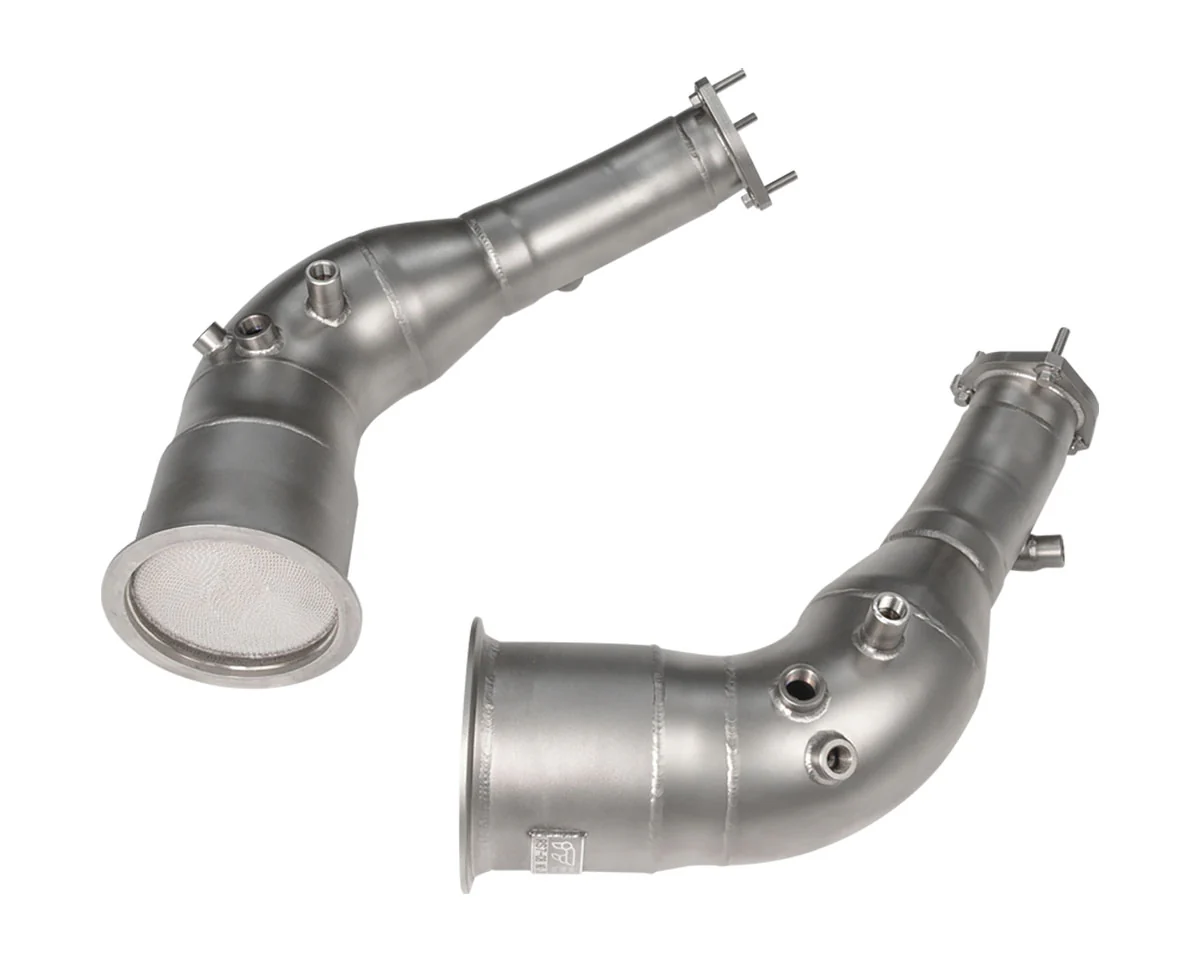 BMW M5 G90/G99 Secondary Downpipes: What Makes Them Special?
The new-generation BMW M5 is already a luxury missile, combining insane power with everyday comfort. Secondary downpipes specifically target the section of the exhaust after the primary catalytic converters. By improving flow here, you reduce restriction while keeping the car relatively emissions-friendly compared to full catless setups.
Installing bmw m3 g80 downpipes ↗ on an M5 can enhance exhaust tone without making it unbearably loud. You’ll notice crisper acceleration, smoother power delivery, and that unmistakable M growl when you put your foot down. For many owners, it’s the perfect balance between performance and refinement.
BMW M3 G80 Downpipes: A Game Changer for Sound and Power
The BMW M3 G80 is all about attitude. It’s sharp, aggressive, and built to be driven hard. Downpipe upgrades on this car are especially rewarding because the turbocharged engine responds extremely well to reduced backpressure.
Aftermarket downpipes help the M3 breathe better, unlocking extra horsepower and torque, especially when paired with a tune. Even without tuning, drivers often report a more alive feeling, quicker throttle response, and a stronger pull through the mid-range. The exhaust note also becomes deeper and more pronounced, turning heads without sounding cheap or overdone.
Sound, Performance, and Daily Driving
One of the biggest concerns drivers have before upgrading is whether their car will still be comfortable day to day. The good news is that high-quality downpipes are engineered to minimize drone while maximizing performance. With the right setup, your BMW will feel just as civil in traffic as it does thrilling on open roads.
It’s also worth noting that secondary downpipes are often easier to live with than full primary downpipe replacements, especially in cities with stricter regulations. They offer a noticeable upgrade without pushing things too far.
Installation and Supporting Mods
Professional installation is always recommended. Downpipes require precision fitting and proper sensor placement to avoid warning lights or performance issues. Many owners also pair downpipes with an ECU tune, upgraded exhaust systems, or intake mods to fully unlock their potential.
Choosing reputable brands matters too. Quality materials, proper welds, and smart engineering make all the difference in long-term reliability and sound quality.
Final Thoughts
Whether you drive an M5 G90/G99 or an M3 G80, downpipes are one of the most satisfying upgrades you can make. They don’t just add power — they enhance the entire driving experience. From the moment you start the engine to the rush of acceleration on the highway, the car simply feels more alive.